
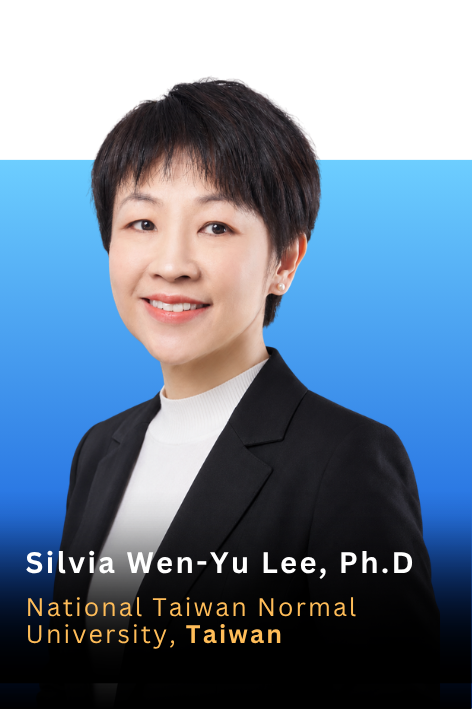
Silvia Wen-Yu Lee, Ph.D.
Silvia Wen-Yu Lee, Ph.D., is a Distinguished Professor and Associate Dean of the College of Education at National Taiwan Normal University, Taiwan. She earned her Ph.D. in Educational Technology from the University of Michigan and has conducted extensive research on virtual reality, augmented reality, online collaborative learning, scientific modelling, problem-based learning, and technology-supported education.
Her expertise is highly relevant to ICEI 2026, especially in artificial intelligence, digital learning, educational technology, computational thinking, and future-ready learning environments. Her research offers evidence-based perspectives on how emerging technologies can improve learning experiences while addressing student engagement, instructional design, and equity in digital education.
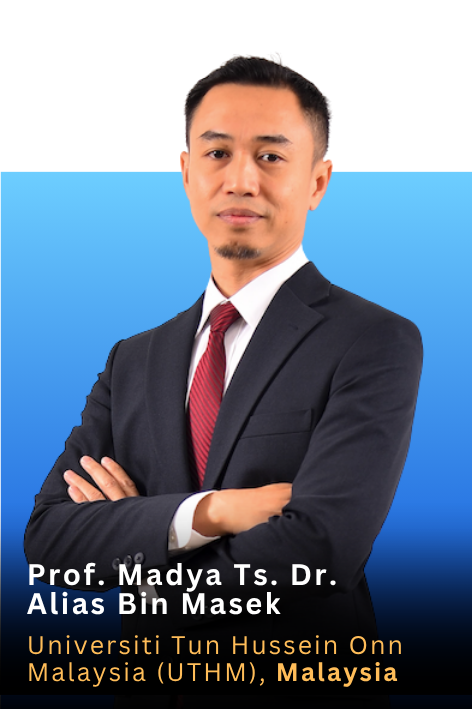
Prof. Madya Ts. Dr. Alias Bin Masek
Prof. Madya Ts. Dr. Alias Bin Masek is an Associate Professor at the Faculty of Technical and Vocational Education, Universiti Tun Hussein Onn Malaysia. His areas of expertise include Technical and Vocational Education and Training, student-centred learning, active learning, problem-based learning, student engagement, instructional facilitation, and the professional development of TVET teachers and instructors.
His research strongly supports the ICEI 2026 focus on vocational education, Industry 5.0, digital learning, and future workforce development. His work on innovative TVET pedagogy, digital competencies, problem-solving, and workplace-oriented learning contributes to the development of graduates who possess relevant technical, personal, and professional skills.
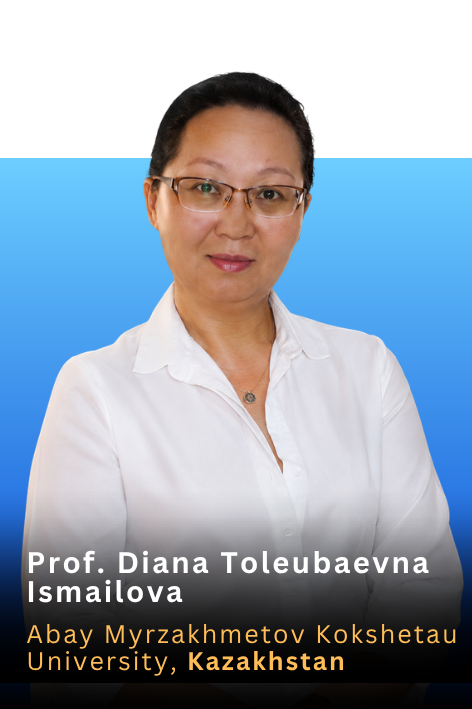
Prof. Diana Toleubayeva Ismailova
Prof. Diana Toleubayeva Ismailova is associated with Abay Myrzakhmetov Kokshetau University, Kazakhstan, as a guest professor. Her published academic work covers areas such as management, international cooperation, tourism development, energy security, public policy, and sustainable regional development.
Her multidisciplinary expertise is relevant to ICEI 2026 through its connection with higher education, sustainable development, internationalisation, and the preparation of learners for complex global challenges. Her perspectives can enrich discussions on how education, institutional cooperation, and curriculum development can support socially responsible and globally aware future generations.
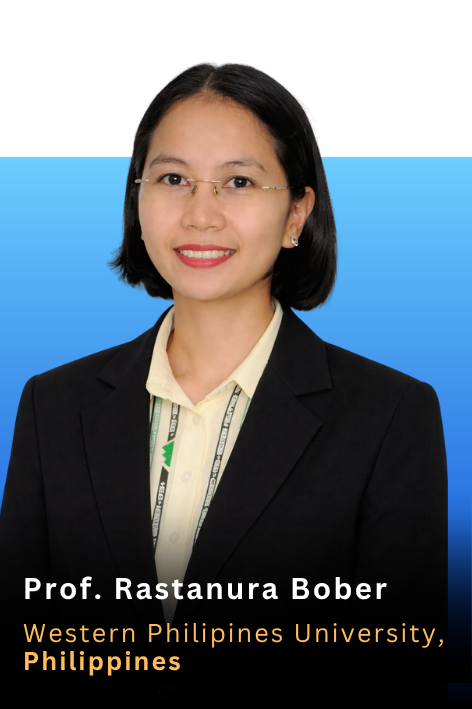
Prof. Rastanura M. Bober
Prof. Rastanura M. Bober is the Dean of the College of Education at Western Philippines University, Philippines. Her academic and professional work is connected with teacher education, educational leadership, curriculum development, graduate employability, institutional research, and the improvement of teacher preparation programmes.
Her expertise directly supports the ICEI 2026 areas of curriculum innovation, teacher development, educational management, and future education systems. Her research on teacher education graduates and curriculum review provides practical insights into aligning educational programmes with professional expectations, community needs, and changing employment environments.
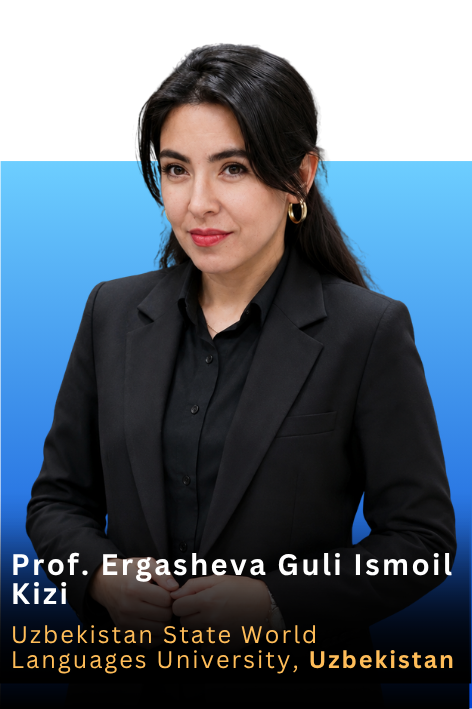
Prof. Dr. Ergasheva Guli Ismoil Kizi
Prof. Dr. Ergasheva Guli Ismoil Kizi is a Professor and Dean at Uzbekistan State World Languages University, Uzbekistan. She holds a Doctor of Science degree in Philology and is active in academic research, doctoral supervision, and scholarly work in comparative linguistics, linguopragmatics, English language studies, and the relationship between language and culture.
Her expertise is relevant to ICEI 2026 in the areas of language education, curriculum innovation, intercultural learning, inclusive communication, and human development. Her work highlights the important role of language and cultural understanding in creating meaningful, globally connected, and inclusive learning environments.

Dr. Chinun Boonroungrut
Dr. Chinun Boonroungrut is a lecturer and researcher at the Faculty of Education, Silpakorn University, Thailand. His academic interests include educational psychology, guidance, student well-being, psychological assessment, teacher attitudes, workplace happiness, and the application of quantitative methods in educational and behavioural research.
His expertise closely aligns with the ICEI 2026 scope on educational psychology, guidance and counselling, mental health, human development, and student well-being. His research contributes to understanding the psychological factors that influence teachers, learners, learning behaviour, and the creation of positive and supportive educational environments.
